Hello everybody, hope you are having an incredible day today. Today, I’m gonna show you how to make a distinctive dish, original apricot daifuku. It is one of my favorites food recipes. For mine, I will make it a little bit tasty. This is gonna smell and look delicious.
Original Apricot Daifuku My husband uttered the word "Daifuku" just when I was thinking about making sweets with fresh ripe apricots. So, I tried making apricot daifuku. Heating the apricots together with sugar enhances the and sour taste with rich flavor. Shiro-an looks beautiful and cool, but using regular adzuki bean paste is fine too.
Original Apricot Daifuku is one of the most well liked of recent trending foods in the world. It is enjoyed by millions daily. It is simple, it is quick, it tastes yummy. Original Apricot Daifuku is something that I’ve loved my whole life. They are fine and they look fantastic.
To get started with this recipe, we have to first prepare a few ingredients. You can have original apricot daifuku using 7 ingredients and 10 steps. Here is how you cook it.
The ingredients needed to make Original Apricot Daifuku:
- Make ready 4 to 5 Fresh apricots (canned or preserved are okay too)
- Get 2 tbsp Sugar
- Make ready 150 grams *Shiratamako
- Get 150 grams *Sugar
- Get 220 ml *Water
- Prepare 80 to 100 grams An
- Take 1 Katakuriko (dusting flour, coating flour)
Be sure you try their daifuku (a type of glutinous rice cake) made by expert sweets craftsmen. If you are looking for the best mochi in Tokyo, the daifuku from Ginza Akebono is hands down one of the best desserts in Tokyo. This Japanese specialty sweet often has sweet red bean paste inside and is occasionally filled with a seasonal fruit. Original ichigo-daifuku consists of sweet red bean paste, anko, wrapped in gooey mochi, and topped with a strawberry (sometimes the strawberry is wrapped inside the mochi ball).
Instructions to make Original Apricot Daifuku:
- To cut the fresh apricot, slice around its seam, twist it in half and lift out the pit. Line the apricots up in a heat-resistant container, sprinkle with some sugar (not listed) and microwave for 2 minutes.
- Drain the liquid and pat dry them with kitchen paper. When using canned or preserved apricots, skip Step 1.
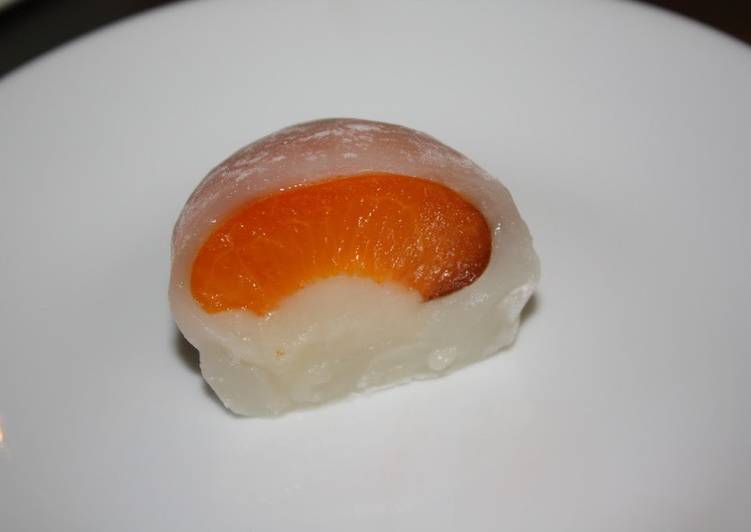
- Fill the indent with a rounded portion of an (photo shows shiro-an).
- Put the * ingredients in a heat resistant container and mix them. Microwave the mix in intervals of 2 minutes, 2 minutes and 1 minute, mixing after each interval to make a smooth and semi-transparent gyuhi (rice dough).
- Put the hot gyuhi from Step 4 in a shallow container that is dusted with katakuriko. Divide the hot gyuhi into equal portions.
- Stretch the portioned gyuhi on your dusted palm. Be careful not to burn your palm with sticky hot dough.
- Put a filled apricots from Step 3 onto the stretched gyuhi and wrap it by stretching the edges towards the center.
- Put the seam side down and that's it. The apricot's color looks beautiful through the translucent skin.
- Daifuku skin is sticky, so put a lot of katakuriko at the bottom or use a sheet of parchment paper.
- You can make bite-sized apricot daifuku by cutting the apricot into 1/8 (cutting half slice of apricot into four pieces). You can make plenty so this is perfect for the party.
This Japanese specialty sweet often has sweet red bean paste inside and is occasionally filled with a seasonal fruit. Original ichigo-daifuku consists of sweet red bean paste, anko, wrapped in gooey mochi, and topped with a strawberry (sometimes the strawberry is wrapped inside the mochi ball). While Soratsuki has this delicious original flavor, as I got to try, there are a handful of ichigo-daifuku with unique fillings to try as well. While the Japanese aren't typically known for their sweets, they were making them well before sugar was introduced to the country. Sweets were often made of ingredients such as nuts, fruit, anko (sweet azuki bean paste), and mochi (sticky rice cakes).
So that is going to wrap this up for this exceptional food original apricot daifuku recipe. Thanks so much for your time. I’m confident you will make this at home. There’s gonna be more interesting food at home recipes coming up. Don’t forget to bookmark this page in your browser, and share it to your family, colleague and friends. Thank you for reading. Go on get cooking!